MA Theology

Join a World Leading Online Masters Degree in Theology.

Low Tuition • Highest Quality • Scholarships for Everyone

Distance learning with synchronous and asynchronous options. Tuition investment <6,000 €. Scholarships available for all admitted students.

Our Masters in Theology is a 100% online, research-driven MA taught by world leading theorists and authors like Chris Hedges, John D. Caputo, Catherine Keller, Jamieson Webster, Todd McGowan, Barry Taylor and others. Designed for deep academic and intellectual work combining theology, psychoanalysis, philosophy, culture, the political in a globally networked learning environment.

About the Program

100% Online MA in Theology

Join our MA in Psychoanalysis from anywhere in the world with a schedule that adapts to your life. Our fully distance learning MA in Theology follows an online format that allows you to balance work, family, and research while joining live seminars, global discussions, and flexible self-paced study.

Research Focused Theology MA

The Distance Learning MA in Theology is focused on your research interest. Supervision, seminars, discussions and readings are aimed to aid your work in the interdisciplinary studies from digital culture, to the arts, psychoanalysis, history, doctrines, politics and theory.

MA with Affordable Tuition

Our tuition allows you to stay out of debt and enjoy learning as liberation. The baseline tuition for the MA in Theology is 6.000€. Every applicant receives a tuition-reduction scholarship. Tuition can be paid in installments. And once you graduate, you will become a co-owner of the GCAS College Dublin.

Global Theological Community

Join a truly global community of scholars, pastors, priests, and researchers committed to advancing theological thinking and practice. Our international cohort brings diverse perspectives to every seminar, creating a vibrant space for dialogue. Students build lasting intellectual and professional relationships that extend far beyond the program and shape their ongoing analytic practice.

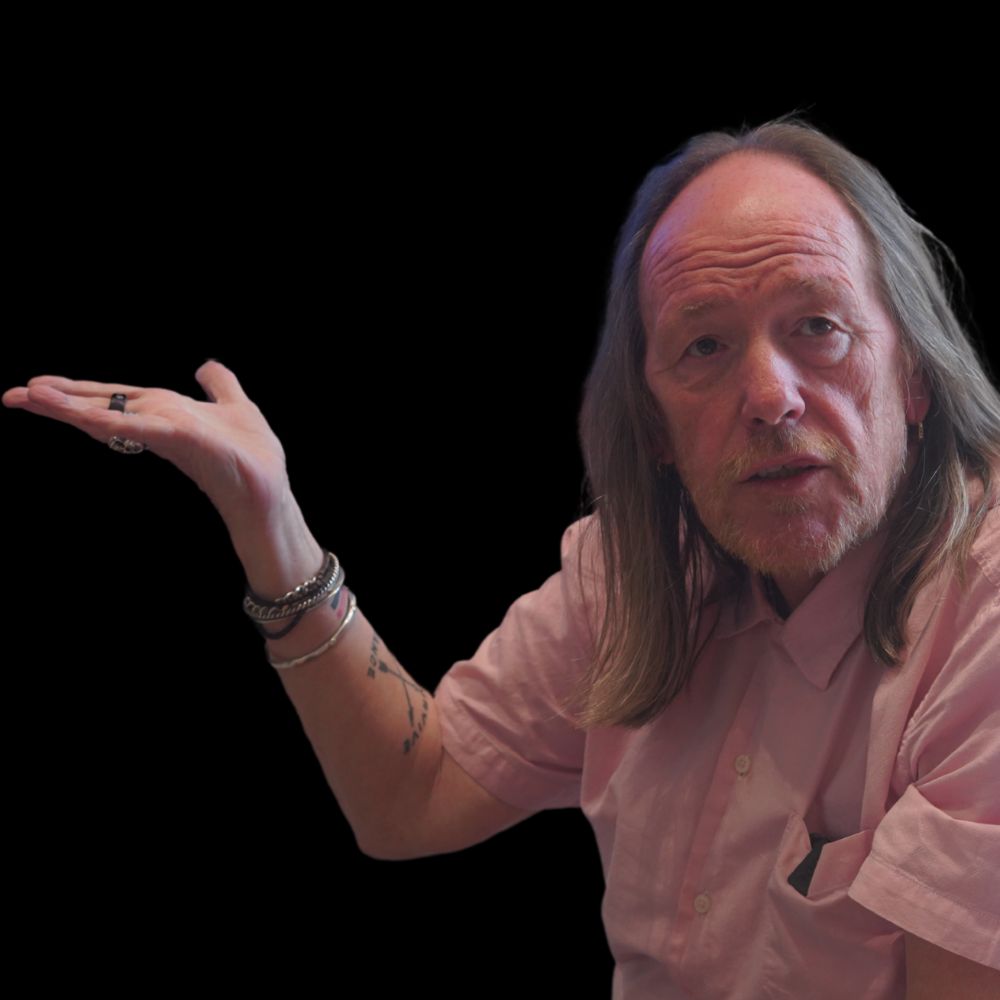
Prof. Dr. Barry Taylor

A Word From The Director

"Our theology programme explores the deep structures and historical impact of religion and its possibilities for re-imagining the world through an adventurous engagement with critical thought and ideas from around the globe."
Prof. Dr. Barry Taylor Program Director
Meet the Director

Curriculum

The MA in Theology at the Global Centre for Advanced Studies is a rigorously interdisciplinary, debt-free program that rethinks theology beyond confessional boundaries, drawing on political theology, continental philosophy, psychoanalysis, ecology, cultural critique, and radical ethics. In dialogue with the process-relational and apophatic thought of Catherine Keller, the prophetic political critique of Chris Hedges, the post-secular and deconstructive theology of John D. Caputo, and the experimental political-theological work of Clayton Crockett, the program treats theology as a living, contested practice rather than a closed system. It engages the tragic, ethical, and anarchic dimensions of belief articulated by Simon Critchley, the radical secular-religious crossings explored by Arthur Bradley and Barry Taylor, and the psychoanalytic interrogation of desire, anxiety, and embodiment developed by Jamieson Webster. This MA emphasizes slow reading, conceptual rigor, and original research within a global seminar format, culminating in a thesis supervised by leading scholars. Fully online, EU-accredited, and grounded in GCAS’s co-owned, commons-based model, the program is designed for students who seek a theology adequate to the crises of late capitalism, ecological collapse, psychic trauma, and the search for meaning beyond dogma.

Theology Program

MA Theology seminars across the 2026–2027 year

September

Theopoetics

John D. Caputo

Theology

October

Theological Reasoning

Barry Taylor

Theology

November

Energy and Change

Clayton Crockett

Theology

December

Theology and Psychedelics

Peter Sjöstedt-Hughes

Theology

January

Violence and Desire

Avital Ronell

Theology

February

Theology and Psychoanalysis

Clayton Crockett

Theology

March

Il Giullare di Dio: St. Francis and Franciscanism in Italian Radical Thought — Pasolini, Negri, Agamben

Igor Fardin

Theology

April

Exploring Religious Practices and Phenomena

Jennifer Moe

Theology

May

Mysticism

Simon Critchley

Philosophy / Theology / Psychoanalysis

May

Eco-Thinking: Creation, Earth, Hope

Catherine Keller

Philosophy / Theology / Psychoanalysis

June

Philosophy and Politics

Chris Hedges

Philosophy / Theology / Politics

Learn from World-Class Faculty

The faculty of the online Master’s in Theology includes internationally recognized scholars, published authors, and practitioners who shape contemporary theory and research across the globe.

Barry Taylor's work focuses on the intersections between religion, theology and culture, with a particular emphasis on the impact and interplay of contemporary digital life on religion and belief, particularly Western Christianity.

He is especially interested in religion where it is least obvious, and in cultural clinamens — the behaviour and phenomena that escape our categorising and thus provide an opportunity for re-framing how we think about and approach life.

John D. Caputo is one of the most influential figures in contemporary continental philosophy of religion, known for developing a "weak theology" and a radical hermeneutics drawn from his readings of Heidegger, Derrida, and Kierkegaard. His work has reshaped how a generation of scholars thinks about faith, deconstruction, and the event that stirs within the name of God.

He is the Thomas J. Watson Professor of Religion Emeritus at Syracuse University and the David R. Cook Professor of Philosophy Emeritus at Villanova University. His many books include The Weakness of God, winner of the American Academy of Religion's award for excellence, The Prayers and Tears of Jacques Derrida, and The Insistence of God. At GCAS he mentors doctoral researchers working at the intersection of philosophy, theology, and critical theory.

Simon Critchley is the Hans Jonas Professor of Philosophy at the New School for Social Research in New York and a Director of the Onassis Foundation. He has written more than twenty books across continental philosophy, literature, psychoanalysis, ethics, and political theory, including studies of Greek tragedy, Heidegger, Shakespeare, David Bowie, football, suicide, and how philosophers die, as well as a novella.

His most recent book, Mysticism (New York Review Books, 2024), approaches mysticism not as religious practice but as a mode of experience and a way of life, drawing on music, poetry, and literature as much as on the mystical tradition itself. Other recent works include Bald: 35 Philosophical Short Cuts (Yale University Press, 2021), Tragedy, the Greeks, and Us (2019), and Question Everything: A Stone Reader (W. W. Norton, 2023), which he co-edited. Through The Stone at the New York Times, he has done a great deal to carry philosophy into public life.

Clayton Crockett is Professor of Philosophy and Religion and Director of Religious Studies at the University of Central Arkansas, and a Distinguished Research Fellow at GCAS. His work spans continental philosophy of religion, political theology, psychoanalytic theory, and new materialism, with a sustained focus on questions of energy.

He is the author of Energy and Change: A New Materialist Cosmotheology (Columbia University Press, 2022), Derrida After the End of Writing: Political Theology and New Materialism (Fordham University Press, 2018), Deleuze Beyond Badiou (Columbia University Press, 2013), and Radical Political Theology: Religion and Politics After Liberalism (Columbia University Press, 2011), as well as Religion, Politics, and the Earth: The New Materialism, co-written with Jeffrey W. Robbins. He co-edits the Insurrections series at Columbia University Press and is a Fellow of the Westar Institute and its Seminar on God and the Human Future.

J. Igor Fardin is a researcher in architecture and philosophy. He holds a PhD in Urban and Regional Development and works at the intersection of architectural theory and history, continental philosophy, and philosophy of religion.

His work, published in both philosophy and architecture journals, focuses on the notions of use and play, as well as on the relationships between architecture, religion, and ecology.

Chris Hedges is a Pulitzer Prize-winning journalist who spent fifteen years as a foreign correspondent for The New York Times, serving as Middle East and Balkans bureau chief and reporting from more than fifty countries. He was part of the team awarded the 2002 Pulitzer Prize for Explanatory Reporting for the paper's coverage of global terrorism, and received the Amnesty International Global Award for Human Rights Journalism the same year. He reported earlier for The Christian Science Monitor, The Dallas Morning News, and National Public Radio, covering the conflicts in El Salvador, Nicaragua, and Guatemala.

He is the author of War Is a Force That Gives Us Meaning, a finalist for the National Book Critics Circle Award, along with American Fascists, Empire of Illusion, Death of the Liberal Class, Wages of Rebellion, Days of Destruction, Days of Revolt with the cartoonist Joe Sacco, and America: The Farewell Tour. He holds a BA in English literature from Colgate University and a Master of Divinity from Harvard Divinity School, where he also studied ancient Greek and Latin. He has taught at Columbia University, New York University, Princeton University, and the University of Toronto, and has taught college-credit courses in the New Jersey prison system since 2013. He writes and broadcasts The Chris Hedges Report.

Catherine Keller is the George T. Cobb Professor of Constructive Theology in the Theological School and Graduate Division of Religion at Drew University, where she teaches process, political, and ecological theology. Her work develops a theology of becoming, reconfiguring ancient symbols of divinity for the sake of a planetary life together across vast webs of difference, and draws on feminist, philosophical, and pluralist intersections with religion.

Her books include Facing Apocalypse: Climate, Democracy, and Other Last Chances (2021), Political Theology of the Earth: Our Planetary Emergency and the Struggle for a New Public (Columbia University Press, 2018), Intercarnations: On the Possibility of Theology (Fordham University Press, 2017), Cloud of the Impossible: Negative Theology and Planetary Entanglement (Columbia University Press, 2014), and Face of the Deep: A Theology of Becoming (2003). Since the start of the millennium she has directed Drew's annual Transdisciplinary Theological Colloquium, which has produced more than a dozen anthologies, most published by Fordham University Press.

Todd McGowan is Professor of English and Director of Film and Television Studies at the University of Vermont, where he teaches theory and film. His work brings Hegelian philosophy and Lacanian psychoanalysis to bear on politics, cinema, and contemporary culture.

He is the author of more than a dozen books, among them The Cambridge Introduction to Jacques Lacan (Cambridge University Press, 2025), Embracing Alienation: Why We Shouldn't Try to Find Ourselves (Repeater, 2024), The Racist Fantasy, Universality and Identity Politics (Columbia University Press, 2020), Emancipation After Hegel: Achieving a Contradictory Revolution (Columbia University Press, 2019), Capitalism and Desire: The Psychic Cost of Free Markets (Columbia University Press, 2016), and The Real Gaze: Film Theory After Lacan (2007). He co-hosts the Why Theory podcast with Ryan Engley, co-edits the Diaeresis series at Northwestern University Press with Slavoj Žižek and Adrian Johnston, and co-organises the annual Lack conference.

Jennifer Moe is Executive Director of the Young Adult Initiative at Garrett Seminary in Evanston, Illinois, and Executive Secretary of the Religious Education Association, the international guild for scholars and practitioners of religious education.

Her research interests include the ways in which religious subcultures and their practices define, create, and reflect religious belief; young adults and their faith practices, and how these are formed or deformed by and within their faith communities; and the long-term resonances of evangelical Christianity, alongside the growing movement of ex-evangelical Christians in the United States and elsewhere. She has served as adjunct faculty in the Religious Education field at Garrett and is affiliate faculty at North Park University and North Park Seminary in Chicago.

Avital Ronell is University Professor of the Humanities and Professor of German and Comparative Literature at New York University, where she co-directs the trauma and violence transdisciplinary studies programme. She also holds the Jacques Derrida Chair in Philosophy at the European Graduate School in Saas-Fee. She completed her doctorate at Princeton in 1979, and studied with Jacob Taubes in Berlin and with Jacques Derrida and Hélène Cixous in Paris.

Her books include Dictations: On Haunted Writing (1986), The Telephone Book: Technology, Schizophrenia, Electric Speech (1989), Crack Wars: Literature, Addiction, Mania (1992), Stupidity (2001), The Test Drive (2005), Loser Sons: Politics and Authority (2012), and Complaint: Grievance among Friends (2018), many of them widely translated. Alongside her writing she has worked extensively in performance, chiefly in Germany and France, and has been named Chevalier de l'Ordre des Arts et des Lettres by the French Republic for her contribution to French thought and letters.

Peter Sjöstedt-Hughes is a philosopher of mind and metaphysics at the University of Exeter, where he is a research fellow and lecturer. His work centres on panpsychism and altered states of consciousness, drawing particularly on Whitehead, Nietzsche, and Spinoza.

He is the author of Modes of Sentience: Psychedelics, Metaphysics, Panpsychism (Psychedelic Press, 2021) and Noumenautics: Metaphysics, Meta-Ethics, Psychedelics (2015), and co-editor, with Christine Hauskeller, of Philosophy and Psychedelics: Frameworks for Exceptional Experience (Bloomsbury Academic, 2022). With Hauskeller he also founded the Philosophy of Psychedelics Exeter Research Group. His recent writing includes work on pantheism in Philosophical Psychology, and his TEDx talk on psychedelics and consciousness has carried these questions to a much wider audience than academic philosophy usually reaches.

Your Career

This program prepares you for leadership roles across academia, industry, and public service.

Academia & Research

Pursue doctoral studies or research positions at leading universities worldwide.

Public Policy

Shape policy at NGOs, government agencies, and international organizations.

Cultural Institutions

Lead at museums, foundations, and cultural organizations.

Consulting

Apply critical thinking skills to strategy and management consulting.

Writing & Publishing

Pursue careers in journalism, publishing, and content creation.

Education

Teach at secondary or post-secondary institutions.

Investment

Total Tuition €6,000

€3,500 if you apply by 1 June

Financial Aid Available

Every accepted student receives tuition reduction scholarships. We are committed to making education accessible.

All accepted applicants receive additional tuition reduction scholarships on top of the reduced tuition.

Admission Requirements

Our faculty and researchers are affiliated with leading academic institutions worldwide, including UC Berkeley, the New School, Columbia University, the London School of Economics, Yale, New York University, Swarthmore College, and Case Western Reserve University, among others. The online MA in Theology attracts exceptional and highly motivated students from a wide range of academic and professional backgrounds. Students in this online Master’s degree in Theology are ambitious thinkers and emerging researchers. Intellectual curiosity, commitment, and research motivation matter most. Admission to the online theology master’s program requires an accredited Bachelor’s degree. Applicants from all backgrounds are welcome and accepted if they demonstrate genuine interest and motivation to engage with psychoanalytic theory and research.

Frequently Asked Questions

The MA in Theology is designed to be completed within one year, though many students finish in approximately 15 months. Flexible pacing allows participants to extend their studies up to two years, depending on individual circumstances and research timelines.

The GCAS MA in Theology rethinks theology beyond confessional boundaries. Rather than a traditional seminary or doctrinal programme, it draws on political theology, continental philosophy, psychoanalysis, ecology, cultural critique, and radical ethics. Theology is treated as a living, contested practice rather than a closed system — making it one of the most intellectually adventurous theology programs in the world.

You complete 10 courses (3 ECTS credits each, totalling 30 ECTS). Each course meets four times for discussion. Students write weekly reflections, deliver a 10-minute presentation, and submit a 1,500-word research paper per course. After completing coursework, you move on to the thesis and comprehensive examination (60 ECTS).

Yes. The MA in Theology is 100% online, including live seminars, coursework, supervision, and thesis development. The programme is designed for global participation without any on-campus requirements. However, we do offer occasional residential intensives in cities like Paris, Berlin, Belfast, and Florence — these are optional and also available online. GCAS does not issue or sponsor student visas to study in the EU.

No. The MA in Theology welcomes applicants from all academic and professional backgrounds — including pastors, priests, artists, activists, philosophers, and cultural workers. Intellectual curiosity, commitment, and research motivation matter most. Admission requires an accredited Bachelor's degree.

Yes. After completing the 10 required courses, students work closely with a supervisor to develop a 20,000-word Master's thesis. Supervision is matched to each student's research focus. Students meet with their academic supervisor monthly to ensure writing and research targets are accomplished.

Yes. The MA in Theology is research-driven and designed to prepare students for doctoral-level (PhD) study in theology, religious studies, philosophy, and related fields. GCAS also offers an accredited PhD program in the Humanities and Social Sciences to which graduates of the MA in Theology are often invited to pursue.

No. The program is non-confessional and welcomes students of all faiths and none. The curriculum engages theology as a critical and intellectual practice — exploring questions of meaning, ethics, politics, and belief without requiring adherence to any particular religious tradition.

Tuition fees are €6,000 for national and international students, but if you apply by 1 June and are accepted the tuition is €3,500. Every accepted student receives an additional tuition reduction scholarship. Tuition can be paid in installments. To help us accomplish our goal of truly accessible education, the application does not have a fee. Once you graduate, you will become a co-owner of GCAS College Dublin.

Yes. The program is accredited by the European Union through Woolf - a higher education institution. Once completed, the degree can be used to continue into post-graduate education and apply for academic, ministerial, policy, and professional positions worldwide.

The program is taught by internationally recognized scholars and authors including Chris Hedges (Pulitzer Prize–winning journalist), John D. Caputo (radical theology), Catherine Keller (process theology and ecology), Barry Taylor (programme director), Jamieson Webster (psychoanalysis and theorist), Todd McGowan, Simon Critchley and others. Past teachers and lecturers have included Alain Badiou, Richard Kearney, Luce Irigaray, and William Desmond.

Ready to Begin?

Applications are open year-round. Start your journey today.

Submit My Application
GCAS Logo
Privacy Overview

This website uses cookies so that we can provide you with the best user experience possible. Cookie information is stored in your browser and performs functions such as recognising you when you return to our website and helping our team to understand which sections of the website you find most interesting and useful.