
Creston Davis is the founder of GCAS. He researches philosophical theology and philosophical practice, and has published books with The MIT Press, Columbia University Press, and Duke University Press. He is the creator of and co-edits the Insurrections: Critical Studies in Religion, Politics and Culture series, an academic book series published by Columbia University Press.
MA Filosofia
The GCAS MA in Philosophy is a flexible, research-driven program designed for students seeking the highest level of philosophical training and intellectual independence. We believe GCAS offers one of the world’s most elite MA programs in philosophy, distinguished by close mentorship with leading global scholars and an uncompromising commitment to original inquiry. Students engage deeply with the philosophical tradition while addressing contemporary social, political, and ethical problems, combining rigorous theoretical study with real-world relevance. The program emphasizes intellectual freedom, interdisciplinary engagement, and philosophy as a living practice capable of genuine social transformation.
Informazioni sul programma
100% Online e flessibile
The GCAS MA in Philosophy is 100% online and designed for maximum flexibility. Courses are held on weekends, making it possible to pursue advanced philosophical research while balancing work, family, and global commitments. Study from anywhere in the world while engaging in rigorous, live seminars with leading scholars and an international intellectual community.
Rigoroso e basato sulla ricerca
The GCAS MA in Philosophy is rigorous and research-driven, designed for students committed to serious, original philosophical inquiry. Courses emphasize close reading, conceptual precision, and sustained argumentation, while individualized mentorship supports the development of independent research projects that meet the highest international academic standards.
Istruzione senza debiti
The GCAS MA in Philosophy is fully accredited and debt-free, grounding academic freedom in material reality. By removing financial pressure, students are free to think critically, take intellectual risks, and pursue original research without compromise. The program combines rigorous philosophical training, close mentorship, and interdisciplinary inquiry within an independent, globally recognized academic framework.
Comunità globale
Il GCAS riunisce studenti e docenti di tutti i continenti in uno spazio intellettuale condiviso. Il programma promuove un dialogo sostenuto tra culture, discipline e tradizioni, creando una vibrante comunità globale impegnata in una seria ricerca, nel sostegno reciproco e nella filosofia come pratica viva e collettiva al di là dei confini.
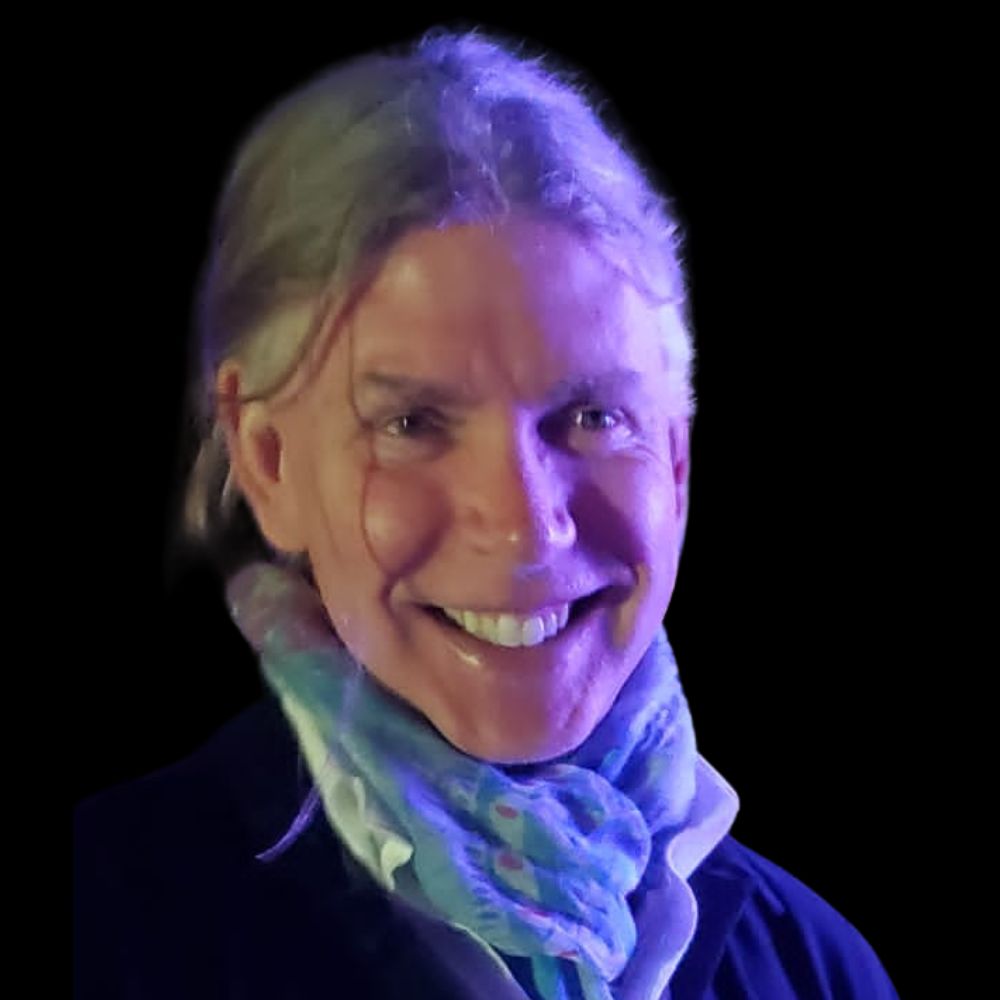
Una parola del direttore
"Philosophy ceases to be philosophy when the act of thinking is subordinated to the oppressive weight of student debt. When survival, repayment, and market anxiety govern the classroom, thought itself is compromised. True philosophical inquiry requires material freedom—the space to question, doubt, and think critically without fear."
Prof. Dr. Creston Davis
Direttore del programma
Incontro con il direttore
Curriculum
Program Overview
| Duration | 1 year |
| Credits | 90 ECTS |
| Format | 100% online |
| Tuition | €6,000* |
| Prerequisites | Bachelor's degree |
*Before scholarship reductions. Applications are open — start studying today.
Program Structure
The MA in Philosophy comprises two parts:
Part I: Coursework (30 ECTS)
Complete 10 seminars (3 ECTS each). Each course meets four times for discussion. Students write weekly reflections, deliver a 10-minute presentation, and submit a 1,500-word research paper.
Part II: Thesis & Examination (60 ECTS)
Write and defend a 20,000-word MA thesis before a committee. Complete the Master's Comprehensive Examination — a four-hour written exam on a topic related to your research. Students meet with their academic supervisor monthly to ensure progress.
Format & Flexibility
All courses are delivered online. We also offer occasional residential intensives in cities like Paris, Berlin, Belfast, and Florence — these are optional and available online as well.
Peer study groups are available but not required.
Philosophy Program
MA Philosophy seminars across the 2026–2027 year
September
Theopoetics
John D. Caputo
PhilosophySeptember
Critical Perspectives on AI
Ewa Lewandowska & Tessina Grant Moloney
PhilosophyOctober
Theatre / Theory / Politics
Arthur Bradley
PhilosophyNovember
Energy and Change
Clayton Crockett
PhilosophyDecember
Philosophy and Psychedelics
Peter Sjöstedt-Hughes
PhilosophyJanuary
Violence and Desire
Avital Ronell
PhilosophyJanuary
Peirce and Semiotics
Rocky Gangle & Antonis Iliopoulos
PhilosophyFebruary
Sex, AI, Philosophy and Psychoanalysis
Isabel Millar
Philosophy / PsychoanalysisMarch
Affective Institutions in Digital Life and the Future of Collective Existence
Claudia Landolfi
PhilosophyApril
AI and Philosophy (a critical engagement)
Maxim Miroshnichenko
PhilosophyMay
Mysticism
Simon Critchley
Philosophy / Theology / PsychoanalysisMay
Eco-Thinking: Creation, Earth, Hope
Catherine Keller
Philosophy / Theology / PsychoanalysisMay
Psychoanalysis, Philosophy, Cinema
Helen Rollins
Philosophy / PsychoanalysisMay–June
The Last Word
Franco Berardi
Philosophy / PoliticsJune
Philosophy and Politics
Chris Hedges
Philosophy / Theology / PoliticsJune
Hegel
Todd McGowan
Philosophy / PsychoanalysisImparare da docenti di fama mondiale
I nostri docenti sono studiosi di spicco, autori pubblicati e professionisti che apportano competenze reali a ogni corso.
Franco "Bifo" Berardi is an Italian Marxist philosopher, theorist, and activist whose work has profoundly shaped contemporary understandings of media, technology, and post-industrial capitalism. A key figure in the autonomist tradition, he has authored over two dozen books and numerous essays exploring the intersections of communication, desire, and political economy.
His political and creative engagement began early: he joined the Italian Communist Youth Federation at thirteen and was later expelled for "factionalism." A participant in the 1968 uprisings at the University of Bologna, where he earned his degree in Aesthetics, Berardi became active in the extra-parliamentary group Potere Operaio and founded the influential magazine A/traverso. He was also a co-founder of Radio Alice (1976–1978), Italy's first free pirate radio station.
Arthur Bradley is Professor of Comparative Literature at Lancaster University, working at the intersection of comparative literature, political theory, philosophy, and religion. He has held visiting positions at the University of Durham, the American University of Beirut, and the Institute of Philosophy at the Research Centre of the Slovenian Academy of Sciences and Arts.
His most recent book, Staging Sovereignty: Theory, Theater, Thaumaturgy (Columbia University Press, 2024), examines the relationship between theatre and sovereignty in modern political theory, philosophy, and drama. Reading political theory alongside literature — Plato, Montaigne, Kant, Hegel, Schmitt, Derrida and Agamben with Shakespeare, Cervantes, Melville, Kafka, Benjamin, Genet and Brook — it offers a new account of political modernity from early modern political theology to neoliberal capitalism. Eric Santner has called it a brilliant analysis, and it has been the subject of a New Books Network interview and a panel at the American Academy of Religion. It appears in the Insurrections series at Columbia University Press.
John D. Caputo is one of the most influential figures in contemporary continental philosophy of religion, known for developing a "weak theology" and a radical hermeneutics drawn from his readings of Heidegger, Derrida, and Kierkegaard. His work has reshaped how a generation of scholars thinks about faith, deconstruction, and the event that stirs within the name of God.
He is the Thomas J. Watson Professor of Religion Emeritus at Syracuse University and the David R. Cook Professor of Philosophy Emeritus at Villanova University. His many books include The Weakness of God, winner of the American Academy of Religion's award for excellence, The Prayers and Tears of Jacques Derrida, and The Insistence of God. At GCAS he mentors doctoral researchers working at the intersection of philosophy, theology, and critical theory.
Simon Critchley is the Hans Jonas Professor of Philosophy at the New School for Social Research in New York and a Director of the Onassis Foundation. He has written more than twenty books across continental philosophy, literature, psychoanalysis, ethics, and political theory, including studies of Greek tragedy, Heidegger, Shakespeare, David Bowie, football, suicide, and how philosophers die, as well as a novella.
His most recent book, Mysticism (New York Review Books, 2024), approaches mysticism not as religious practice but as a mode of experience and a way of life, drawing on music, poetry, and literature as much as on the mystical tradition itself. Other recent works include Bald: 35 Philosophical Short Cuts (Yale University Press, 2021), Tragedy, the Greeks, and Us (2019), and Question Everything: A Stone Reader (W. W. Norton, 2023), which he co-edited. Through The Stone at the New York Times, he has done a great deal to carry philosophy into public life.
Clayton Crockett is Professor of Philosophy and Religion and Director of Religious Studies at the University of Central Arkansas, and a Distinguished Research Fellow at GCAS. His work spans continental philosophy of religion, political theology, psychoanalytic theory, and new materialism, with a sustained focus on questions of energy.
He is the author of Energy and Change: A New Materialist Cosmotheology (Columbia University Press, 2022), Derrida After the End of Writing: Political Theology and New Materialism (Fordham University Press, 2018), Deleuze Beyond Badiou (Columbia University Press, 2013), and Radical Political Theology: Religion and Politics After Liberalism (Columbia University Press, 2011), as well as Religion, Politics, and the Earth: The New Materialism, co-written with Jeffrey W. Robbins. He co-edits the Insurrections series at Columbia University Press and is a Fellow of the Westar Institute and its Seminar on God and the Human Future.
Rocco "Rocky" Gangle is Professor of Philosophy at Endicott College, where he has taught since 2007, having previously held positions at Oberlin College and the University of California, Merced. His work ranges across Spinoza, Peirce, Deleuze, Levinas, and Laruelle, and across metaphysics, philosophy of science, political theology, and diagrammatic logic.
He is the author of Diagrammatic Immanence: Category Theory and Philosophy (Edinburgh University Press, 2016), which draws Spinozist metaphysics, Peircean semiotics, and Deleuze's philosophy of difference together through the formal resources of category theory, and of François Laruelle's Philosophies of Difference: A Critical Introduction and Guide (Edinburgh University Press, 2013). With Gianluca Caterina he wrote Iconicity and Abduction (Springer), a study of iconic signs and Peirce's existential graphs. He has also published dozens of articles and chapters in logic, phenomenology, semiotics, and philosophy of science.
Chris Hedges is a Pulitzer Prize-winning journalist who spent fifteen years as a foreign correspondent for The New York Times, serving as Middle East and Balkans bureau chief and reporting from more than fifty countries. He was part of the team awarded the 2002 Pulitzer Prize for Explanatory Reporting for the paper's coverage of global terrorism, and received the Amnesty International Global Award for Human Rights Journalism the same year. He reported earlier for The Christian Science Monitor, The Dallas Morning News, and National Public Radio, covering the conflicts in El Salvador, Nicaragua, and Guatemala.
He is the author of War Is a Force That Gives Us Meaning, a finalist for the National Book Critics Circle Award, along with American Fascists, Empire of Illusion, Death of the Liberal Class, Wages of Rebellion, Days of Destruction, Days of Revolt with the cartoonist Joe Sacco, and America: The Farewell Tour. He holds a BA in English literature from Colgate University and a Master of Divinity from Harvard Divinity School, where he also studied ancient Greek and Latin. He has taught at Columbia University, New York University, Princeton University, and the University of Toronto, and has taught college-credit courses in the New Jersey prison system since 2013. He writes and broadcasts The Chris Hedges Report.
Catherine Keller is the George T. Cobb Professor of Constructive Theology in the Theological School and Graduate Division of Religion at Drew University, where she teaches process, political, and ecological theology. Her work develops a theology of becoming, reconfiguring ancient symbols of divinity for the sake of a planetary life together across vast webs of difference, and draws on feminist, philosophical, and pluralist intersections with religion.
Her books include Facing Apocalypse: Climate, Democracy, and Other Last Chances (2021), Political Theology of the Earth: Our Planetary Emergency and the Struggle for a New Public (Columbia University Press, 2018), Intercarnations: On the Possibility of Theology (Fordham University Press, 2017), Cloud of the Impossible: Negative Theology and Planetary Entanglement (Columbia University Press, 2014), and Face of the Deep: A Theology of Becoming (2003). Since the start of the millennium she has directed Drew's annual Transdisciplinary Theological Colloquium, which has produced more than a dozen anthologies, most published by Fordham University Press.
Claudia Landolfi is a philosopher, essayist, licensed psychologist, and philosophical consultant, and a theorist of the Ethics of Affect in digital governmentality. She holds degrees in philosophy and psychology and a doctorate in ethics and political-legal philosophy, and has worked as a researcher at the University of Maastricht.
Her work has developed concepts including net-confession, legal subject, psychic enclosure, the legal principle of subjectivation, informational matter, the governmentalisation of emotions in digital, the affective sleepwalker, and affective rabdomancy on the net. She has also devised a method for investigating beliefs in contexts of crisis, alongside an interdisciplinary research method combining philosophy, psychology, neuroscience, philosophy of law, philosophy of politics, and ethics to understand processes of subjectivation in the digital world. She is the founder of the Academy of Philosophy Mirista.
Todd McGowan is Professor of English and Director of Film and Television Studies at the University of Vermont, where he teaches theory and film. His work brings Hegelian philosophy and Lacanian psychoanalysis to bear on politics, cinema, and contemporary culture.
He is the author of more than a dozen books, among them The Cambridge Introduction to Jacques Lacan (Cambridge University Press, 2025), Embracing Alienation: Why We Shouldn't Try to Find Ourselves (Repeater, 2024), The Racist Fantasy, Universality and Identity Politics (Columbia University Press, 2020), Emancipation After Hegel: Achieving a Contradictory Revolution (Columbia University Press, 2019), Capitalism and Desire: The Psychic Cost of Free Markets (Columbia University Press, 2016), and The Real Gaze: Film Theory After Lacan (2007). He co-hosts the Why Theory podcast with Ryan Engley, co-edits the Diaeresis series at Northwestern University Press with Slavoj Žižek and Adrian Johnston, and co-organises the annual Lack conference.
Dr Isabel Millar is a philosopher and psychoanalytic theorist from London. Her first book, The Psychoanalysis of Artificial Intelligence, was published in 2021 and received widespread critical acclaim.
Maxim (Maksym) Miroshnichenko holds a PhD in philosophy (2019) and is a research fellow at the Bauhaus-Universität Weimar. His interests revolve around cybernetics and systems theory, enactive cognition, Soviet philosophy of science, and AI.
He is currently working on a project dedicated to the intersections of Marxism and cybernetics in Soviet logico-methodological thought, as a contribution to discussions on AI, cognitivism, and posthumanism.
Helen Rollins graduated as top student in Corpus Christi College at Cambridge University, with a double first in modern languages. She was also a boursière étrangère at the École Normale Supérieure in Lyon. At twenty-two she taught French language, film and literature at Eton College, leaving that post two years later to work as a filmmaker.
In her cinematic work she explores ideas of desire, repression and loss. She has a particular interest in psychoanalysis, continental philosophy, and film and literature from the French and Spanish-speaking world. She has taught at GCAS since 2020.
Avital Ronell is University Professor of the Humanities and Professor of German and Comparative Literature at New York University, where she co-directs the trauma and violence transdisciplinary studies programme. She also holds the Jacques Derrida Chair in Philosophy at the European Graduate School in Saas-Fee. She completed her doctorate at Princeton in 1979, and studied with Jacob Taubes in Berlin and with Jacques Derrida and Hélène Cixous in Paris.
Her books include Dictations: On Haunted Writing (1986), The Telephone Book: Technology, Schizophrenia, Electric Speech (1989), Crack Wars: Literature, Addiction, Mania (1992), Stupidity (2001), The Test Drive (2005), Loser Sons: Politics and Authority (2012), and Complaint: Grievance among Friends (2018), many of them widely translated. Alongside her writing she has worked extensively in performance, chiefly in Germany and France, and has been named Chevalier de l'Ordre des Arts et des Lettres by the French Republic for her contribution to French thought and letters.
Peter Sjöstedt-Hughes is a philosopher of mind and metaphysics at the University of Exeter, where he is a research fellow and lecturer. His work centres on panpsychism and altered states of consciousness, drawing particularly on Whitehead, Nietzsche, and Spinoza.
He is the author of Modes of Sentience: Psychedelics, Metaphysics, Panpsychism (Psychedelic Press, 2021) and Noumenautics: Metaphysics, Meta-Ethics, Psychedelics (2015), and co-editor, with Christine Hauskeller, of Philosophy and Psychedelics: Frameworks for Exceptional Experience (Bloomsbury Academic, 2022). With Hauskeller he also founded the Philosophy of Psychedelics Exeter Research Group. His recent writing includes work on pantheism in Philosophical Psychology, and his TEDx talk on psychedelics and consciousness has carried these questions to a much wider audience than academic philosophy usually reaches.
La vostra carriera
Questo programma vi prepara a ricoprire ruoli di leadership nel mondo accademico, nell'industria e nel servizio pubblico.
Accademico e di ricerca
Proseguire gli studi di dottorato o le posizioni di ricerca presso le principali università di tutto il mondo.
Politica pubblica
Definire le politiche di ONG, agenzie governative e organizzazioni internazionali.
Istituzioni culturali
Dirigere musei, fondazioni e organizzazioni culturali.
Consulenza
Applicare le capacità di pensiero critico alla consulenza strategica e gestionale.
Scrittura e pubblicazione
Perseguire una carriera nel giornalismo, nell'editoria e nella creazione di contenuti.
Istruzione
Insegnare in istituti secondari o post-secondari.
Investimenti
Totale tasse scolastiche
€6,000
Aiuto finanziario disponibile
Ogni studente accettato riceve una borsa di studio per la riduzione delle tasse scolastiche. Ci impegniamo a rendere l'istruzione accessibile.
Requisiti di ammissione
Degree Overview
The course teaches students comprehensive and specialised subjects in philosophy; it develops skills in critical thinking and analysis. By exposing students to both the broad themes of philosophy and specialised topics and key historical figures, students will gain an advanced understanding of the field.
Learning Outcomes
Conoscenza
Students will gain comprehensive knowledge and understanding of philosophy, including knowledge that is at the forefront of the field.
Students will be able to apply their academic scholarly abilities to produce innovative analyses of key philosophical topics.
Students will display original thinking on the basis of the knowledge they gain in the course.
Skills
Develop advanced, innovative, and multi-disciplinary problem-solving skills.
Communicate philosophical concepts clearly and unambiguously to specialised and non-specialized audiences.
Develop advanced abilities related to research methods and the conventions of appropriate, graduate-level philosophical writing.
Critically evaluate alternative approaches to solving key philosophical questions on the basis of academic scholarship and case studies, demonstrating reflection on social and ethical responsibilities.
Formulate philosophical judgments despite incomplete information by integrating knowledge and approaches from diverse domains including academic scholarly articles, verbal discussions, and original ideation and research.
Enquire critically into the theoretical strategies for handling key philosophical questions.
Develop new skills in response to emerging knowledge in the field and professional techniques to demonstrate leadership and innovation in the scholarly community.
Competences
Formulate research-based solutions to philosophical and scholarly questions in environments of incomplete information.
Manage decisions with autonomy in complex and unpredictable environments.
Organize projects and people for scholarly discussions in a way that is responsive to the conventions of rigorous philosophical engagements.
Demonstrate learning skills needed to maintain continued, life-long critical engagement.
Teaching & Facilities
The programme is taught 100% online. Classes meet approximately once per week for around nine months. MA researchers attend one to two classes per month, meaning synchronous class time is approximately 5 hours per week. After the teaching period, MA researchers work on their dissertations.
Each MA researcher is assigned a supervisor best suited to their topic and research aims. GCAS has access to a wide range of supervisors internal and external to the institution. During the dissertation period, MA researchers meet regularly with their supervisor and cohort.
Although this is a full-time programme, the majority of students who are employed full-time have successfully completed the degree within 13 months.
Researchers in the MA in Philosophy programme have access to the entire GCAS ecosystem, including all courses offered in the E-School as well as on-site seminars. Students also have access to all material recorded and stored in the GCAS library, including courses taught by world-leading thinkers in economics, natural sciences, sustainability, cryptocurrencies, artificial intelligence, and more.
Prerequisites for Acceptance
Our researchers come from some of the best academic institutions in the world, including UC Berkeley, Columbia University, London School of Economics, Swarthmore, Yale, New York University, and Case Western Reserve University. However, as a college challenging traditional academia, we attract applicants who bring diverse backgrounds, experiences, and fresh perspectives. If you are passionate about learning and want to help reshape the future of education, we invite you to join our intellectual community.
Our degree programme is rigorous. Applicants must possess an accredited Bachelor's degree to be considered for admission. Most applicants hold a first-class or strong upper-second-class undergraduate degree. For applicants with a degree from the USA, most hold a minimum GPA of 3.5 out of 4.0. If your degree is not from the EU or the USA, contact our admissions team for more information.
Admission is competitive. Most successful applicants hold degrees in philosophy, psychology, neuroscience, psychoanalysis, or a similar field of study. However, applications from all backgrounds are encouraged if sufficient motivation and interest can be demonstrated.
Domande frequenti
The program is intended to be completed within one year, though many participants take around 14 months to finish, and some extend up to two years depending on their pace and circumstances. Normally, a student can take up to four years to complete the program.
You will begin working directly with your academic supervisor once you have completed your core course requirements (10 courses). During the initial phase of the program, your focus is entirely on immersive coursework, conceptual development, and peer collaboration. As you finish your final course, you will be formally matched with your mentor to immediately begin structuring, writing, and defending your Master's thesis.
You must complete 10 courses (each worth 3 ECTS credits). One course can be an elective or as an independent study. All courses are "short" meaning they only meet up 4 times -- typically on the weekends.
Yes. While it is entirely optional, we highly recommend designing an independent study module as it allows you to deeply investigate a specific conceptual framework or text critical to your upcoming Master’s thesis. The independent study is worth 3 ECTS credits. Please Note: Because this module requires dedicated, one-on-one academic guidance outside of the standard curriculum, an independent study involves an additional fee of 200€ to directly compensate your specialized faculty supervisor for their personalized mentorship.
Yes. To complete the GCAS MA in Philosophy requires that you write a 20,000 word thesis and defend your argument/thesis in front of a committee of Ph.D. faculty members.
Yes, after you complete or nearly complete your 10 courses you then move into the "MA thesis phase". This means you'll work with a GCAS faculty member as you compose and defend your MA thesis. It's the most rewarding part of the MA program according to the majority of MA researchers in the program.
No, not if you choose a GCAS Philosophy core faculty member typically Dr. Jamie Davies or Filippo Scafi. However, if you want a supervisor who is not a Core GCAS faculty member you will need to pay 100€ per month extra.
Dr. Creston Davis, Dr. Mario D'Amato, Dr. Jamie Davies, and Filippo Scafi.
That's fine with GCAS. You will be charged 200€ per month starting on the 15th month from enrollment. You will have up to four years to complete the degree. You don't have to pay extra fees if you complete the program within 14 months.
Pronti a iniziare?
Le candidature sono aperte tutto l'anno. Iniziate il vostro viaggio oggi stesso.
Invia la mia domanda