
Creston Davis is the founder of GCAS. He researches philosophical theology and philosophical practice, and has published books with The MIT Press, Columbia University Press, and Duke University Press. He is the creator of and co-edits the Insurrections: Critical Studies in Religion, Politics and Culture series, an academic book series published by Columbia University Press.
MA Filosofía
El Máster en Filosofía de GCAS es un programa flexible, orientado a la investigación y diseñado para estudiantes que buscan el más alto nivel de formación filosófica e independencia intelectual. Creemos que GCAS ofrece uno de los programas de maestría más elitistas del mundo en filosofía, que se distingue por una estrecha tutoría con los principales académicos mundiales y un compromiso inflexible con la investigación original. Los estudiantes se comprometen profundamente con la tradición filosófica al tiempo que abordan problemas sociales, políticos y éticos contemporáneos, combinando el estudio teórico riguroso con la relevancia para el mundo real. El programa hace hincapié en la libertad intelectual, el compromiso interdisciplinario y la filosofía como práctica viva capaz de una auténtica transformación social.
Acerca del programa
100% En línea y flexible
El GCAS MA en Filosofía es 100% en línea y diseñado para la máxima flexibilidad. Los cursos se imparten los fines de semana, por lo que es posible llevar a cabo la investigación filosófica avanzada, mientras que el equilibrio entre el trabajo, la familia y los compromisos globales. Estudie desde cualquier parte del mundo mientras participa en rigurosos seminarios en directo con destacados académicos y una comunidad intelectual internacional.
Rigor e investigación
El Máster en Filosofía GCAS es riguroso y orientado a la investigación, diseñado para estudiantes comprometidos con la investigación filosófica seria y original. Los cursos enfatizan la lectura atenta, la precisión conceptual y la argumentación sostenida, mientras que la tutoría individualizada apoya el desarrollo de proyectos de investigación independientes que cumplan con los más altos estándares académicos internacionales.
Educación sin deudas
El Máster en Filosofía GCAS está totalmente acreditado y libre de deudas, basando la libertad académica en la realidad material. Al eliminar la presión financiera, los estudiantes son libres de pensar críticamente, tomar riesgos intelectuales, y perseguir la investigación original sin compromiso. El programa combina una rigurosa formación filosófica, una estrecha tutoría y la investigación interdisciplinaria dentro de un marco académico independiente y reconocido a nivel mundial.
Comunidad mundial
El GCAS reúne a estudiantes y profesores de todos los continentes en un espacio intelectual compartido. El programa fomenta el diálogo sostenido entre culturas, disciplinas y tradiciones, creando una vibrante comunidad global comprometida con la erudición seria, el apoyo mutuo y la filosofía como una práctica viva y colectiva más allá de las fronteras.
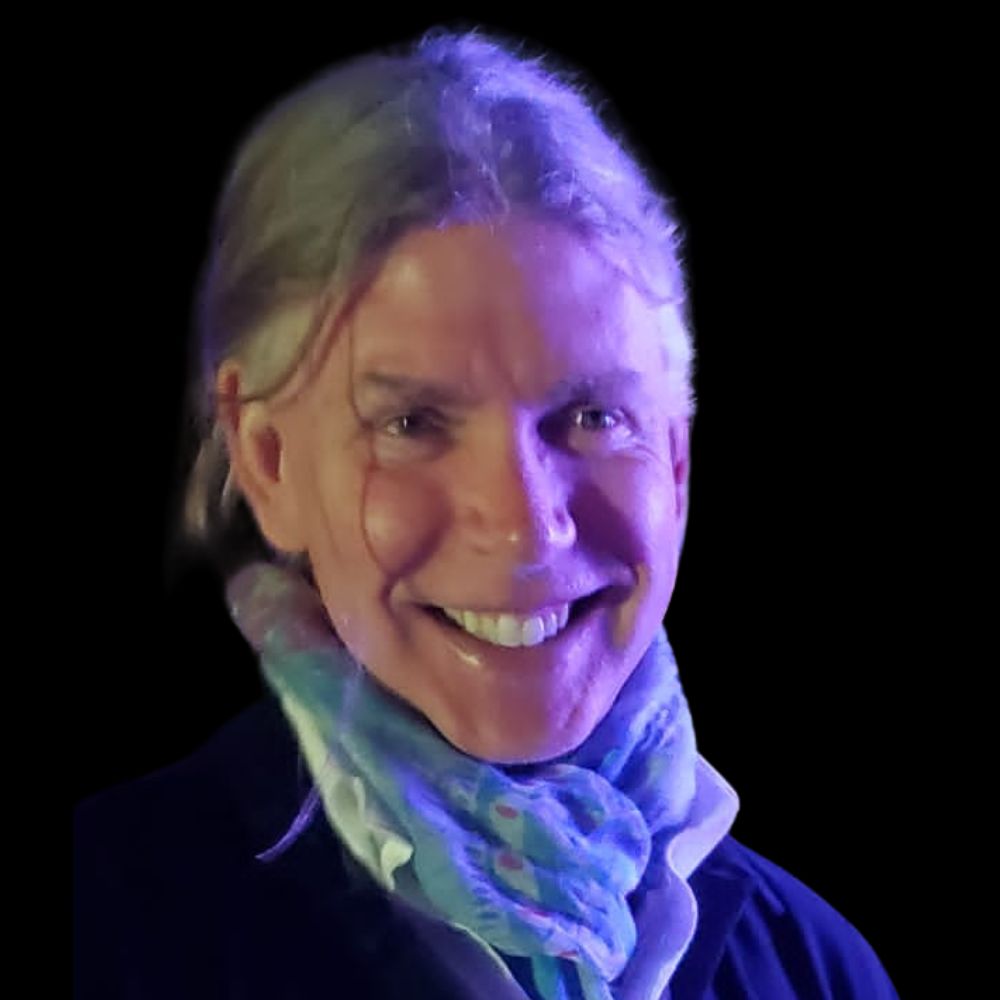
Palabras del Director
"La filosofía deja de ser filosofía cuando el acto de pensar se subordina al opresivo peso de la deuda estudiantil. Cuando la supervivencia, el reembolso y la ansiedad del mercado gobiernan el aula, el pensamiento mismo se ve comprometido. La verdadera investigación filosófica requiere libertad material: el espacio para cuestionar, dudar y pensar críticamente sin miedo"."
Prof. Dr. Creston Davis
Director del programa
Conozca al Director
Plan de estudios
Resumen del programa
| Duración | 1 año |
| Créditos | 90 ECTS |
| Formato | 100% en línea |
| Matrícula | €6,000* |
| Requisitos previos | Licenciatura |
*Antes de las reducciones de becas. Las solicitudes están abiertas: empieza a estudiar hoy mismo.
Estructura del programa
El Máster en Filosofía consta de dos partes:
Parte I: Trabajo de curso (30 ECTS)
Completar 10 seminarios (3 ECTS cada uno). Cada curso se reúne cuatro veces para debatir. Los estudiantes escriben reflexiones semanales, hacen una presentación de 10 minutos y entregan un trabajo de investigación de 1.500 palabras.
Parte II: Tesis y examen (60 ECTS)
Redactar y defender una tesis de máster de 20.000 palabras ante un comité. Completar el examen global del máster: un examen escrito de cuatro horas sobre un tema relacionado con su investigación. Los estudiantes se reúnen mensualmente con su supervisor académico para asegurar su progreso.
Formato y flexibilidad
Todos los cursos se imparten en línea. También ofrecemos intensivos residenciales ocasionales en ciudades como París, Berlín, Belfast y Florencia - estos son opcionales y están disponibles en línea también.
Los grupos de estudio entre iguales están disponibles, pero no son obligatorios.
Philosophy Program
MA Philosophy seminars across the 2026–2027 year
September
Theopoetics
John D. Caputo
PhilosophySeptember
Critical Perspectives on AI
Ewa Lewandowska & Tessina Grant Moloney
PhilosophyOctober
Theatre / Theory / Politics
Arthur Bradley
PhilosophyNovember
Energía y cambio
Clayton Crockett
PhilosophyDecember
Filosofía y psicodelia
Peter Sjöstedt-Hughes
PhilosophyJanuary
Violence and Desire
Avital Ronell
PhilosophyJanuary
Peirce and Semiotics
Rocky Gangle & Antonis Iliopoulos
PhilosophyFebruary
Sex, AI, Philosophy and Psychoanalysis
Isabel Millar
Philosophy / PsychoanalysisMarch
Affective Institutions in Digital Life and the Future of Collective Existence
Claudia Landolfi
PhilosophyApril
AI and Philosophy (a critical engagement)
Maxim Miroshnichenko
PhilosophyMay
Mysticism
Simon Critchley
Philosophy / Theology / PsychoanalysisMay
Eco-Thinking: Creation, Earth, Hope
Catherine Keller
Philosophy / Theology / PsychoanalysisMay
Psychoanalysis, Philosophy, Cinema
Helen Rollins
Philosophy / PsychoanalysisMay–June
The Last Word
Franco Berardi
Philosophy / PoliticsJune
Philosophy and Politics
Chris Hedges
Philosophy / Theology / PoliticsJune
Hegel
Todd McGowan
Philosophy / PsychoanalysisAprenda de profesores de talla mundial
Nuestros profesores son destacados académicos, autores publicados y profesionales que aportan su experiencia del mundo real a cada curso.
Franco "Bifo" Berardi is an Italian Marxist philosopher, theorist, and activist whose work has profoundly shaped contemporary understandings of media, technology, and post-industrial capitalism. A key figure in the autonomist tradition, he has authored over two dozen books and numerous essays exploring the intersections of communication, desire, and political economy.
His political and creative engagement began early: he joined the Italian Communist Youth Federation at thirteen and was later expelled for "factionalism." A participant in the 1968 uprisings at the University of Bologna, where he earned his degree in Aesthetics, Berardi became active in the extra-parliamentary group Potere Operaio and founded the influential magazine A/traverso. He was also a co-founder of Radio Alice (1976–1978), Italy's first free pirate radio station.
Arthur Bradley is Professor of Comparative Literature at Lancaster University, working at the intersection of comparative literature, political theory, philosophy, and religion. He has held visiting positions at the University of Durham, the American University of Beirut, and the Institute of Philosophy at the Research Centre of the Slovenian Academy of Sciences and Arts.
His most recent book, Staging Sovereignty: Theory, Theater, Thaumaturgy (Columbia University Press, 2024), examines the relationship between theatre and sovereignty in modern political theory, philosophy, and drama. Reading political theory alongside literature — Plato, Montaigne, Kant, Hegel, Schmitt, Derrida and Agamben with Shakespeare, Cervantes, Melville, Kafka, Benjamin, Genet and Brook — it offers a new account of political modernity from early modern political theology to neoliberal capitalism. Eric Santner has called it a brilliant analysis, and it has been the subject of a New Books Network interview and a panel at the American Academy of Religion. It appears in the Insurrections series at Columbia University Press.
John D. Caputo is one of the most influential figures in contemporary continental philosophy of religion, known for developing a "weak theology" and a radical hermeneutics drawn from his readings of Heidegger, Derrida, and Kierkegaard. His work has reshaped how a generation of scholars thinks about faith, deconstruction, and the event that stirs within the name of God.
He is the Thomas J. Watson Professor of Religion Emeritus at Syracuse University and the David R. Cook Professor of Philosophy Emeritus at Villanova University. His many books include The Weakness of God, winner of the American Academy of Religion's award for excellence, The Prayers and Tears of Jacques Derrida, and The Insistence of God. At GCAS he mentors doctoral researchers working at the intersection of philosophy, theology, and critical theory.
Simon Critchley is the Hans Jonas Professor of Philosophy at the New School for Social Research in New York and a Director of the Onassis Foundation. He has written more than twenty books across continental philosophy, literature, psychoanalysis, ethics, and political theory, including studies of Greek tragedy, Heidegger, Shakespeare, David Bowie, football, suicide, and how philosophers die, as well as a novella.
His most recent book, Mysticism (New York Review Books, 2024), approaches mysticism not as religious practice but as a mode of experience and a way of life, drawing on music, poetry, and literature as much as on the mystical tradition itself. Other recent works include Bald: 35 Philosophical Short Cuts (Yale University Press, 2021), Tragedy, the Greeks, and Us (2019), and Question Everything: A Stone Reader (W. W. Norton, 2023), which he co-edited. Through The Stone at the New York Times, he has done a great deal to carry philosophy into public life.
Clayton Crockett is Professor of Philosophy and Religion and Director of Religious Studies at the University of Central Arkansas, and a Distinguished Research Fellow at GCAS. His work spans continental philosophy of religion, political theology, psychoanalytic theory, and new materialism, with a sustained focus on questions of energy.
He is the author of Energy and Change: A New Materialist Cosmotheology (Columbia University Press, 2022), Derrida After the End of Writing: Political Theology and New Materialism (Fordham University Press, 2018), Deleuze Beyond Badiou (Columbia University Press, 2013), and Radical Political Theology: Religion and Politics After Liberalism (Columbia University Press, 2011), as well as Religion, Politics, and the Earth: The New Materialism, co-written with Jeffrey W. Robbins. He co-edits the Insurrections series at Columbia University Press and is a Fellow of the Westar Institute and its Seminar on God and the Human Future.
Rocco "Rocky" Gangle is Professor of Philosophy at Endicott College, where he has taught since 2007, having previously held positions at Oberlin College and the University of California, Merced. His work ranges across Spinoza, Peirce, Deleuze, Levinas, and Laruelle, and across metaphysics, philosophy of science, political theology, and diagrammatic logic.
He is the author of Diagrammatic Immanence: Category Theory and Philosophy (Edinburgh University Press, 2016), which draws Spinozist metaphysics, Peircean semiotics, and Deleuze's philosophy of difference together through the formal resources of category theory, and of François Laruelle's Philosophies of Difference: A Critical Introduction and Guide (Edinburgh University Press, 2013). With Gianluca Caterina he wrote Iconicity and Abduction (Springer), a study of iconic signs and Peirce's existential graphs. He has also published dozens of articles and chapters in logic, phenomenology, semiotics, and philosophy of science.
Chris Hedges is a Pulitzer Prize-winning journalist who spent fifteen years as a foreign correspondent for The New York Times, serving as Middle East and Balkans bureau chief and reporting from more than fifty countries. He was part of the team awarded the 2002 Pulitzer Prize for Explanatory Reporting for the paper's coverage of global terrorism, and received the Amnesty International Global Award for Human Rights Journalism the same year. He reported earlier for The Christian Science Monitor, The Dallas Morning News, and National Public Radio, covering the conflicts in El Salvador, Nicaragua, and Guatemala.
He is the author of War Is a Force That Gives Us Meaning, a finalist for the National Book Critics Circle Award, along with American Fascists, Empire of Illusion, Death of the Liberal Class, Wages of Rebellion, Days of Destruction, Days of Revolt with the cartoonist Joe Sacco, and America: The Farewell Tour. He holds a BA in English literature from Colgate University and a Master of Divinity from Harvard Divinity School, where he also studied ancient Greek and Latin. He has taught at Columbia University, New York University, Princeton University, and the University of Toronto, and has taught college-credit courses in the New Jersey prison system since 2013. He writes and broadcasts The Chris Hedges Report.
Catherine Keller is the George T. Cobb Professor of Constructive Theology in the Theological School and Graduate Division of Religion at Drew University, where she teaches process, political, and ecological theology. Her work develops a theology of becoming, reconfiguring ancient symbols of divinity for the sake of a planetary life together across vast webs of difference, and draws on feminist, philosophical, and pluralist intersections with religion.
Her books include Facing Apocalypse: Climate, Democracy, and Other Last Chances (2021), Political Theology of the Earth: Our Planetary Emergency and the Struggle for a New Public (Columbia University Press, 2018), Intercarnations: On the Possibility of Theology (Fordham University Press, 2017), Cloud of the Impossible: Negative Theology and Planetary Entanglement (Columbia University Press, 2014), and Face of the Deep: A Theology of Becoming (2003). Since the start of the millennium she has directed Drew's annual Transdisciplinary Theological Colloquium, which has produced more than a dozen anthologies, most published by Fordham University Press.
Claudia Landolfi is a philosopher, essayist, licensed psychologist, and philosophical consultant, and a theorist of the Ethics of Affect in digital governmentality. She holds degrees in philosophy and psychology and a doctorate in ethics and political-legal philosophy, and has worked as a researcher at the University of Maastricht.
Her work has developed concepts including net-confession, legal subject, psychic enclosure, the legal principle of subjectivation, informational matter, the governmentalisation of emotions in digital, the affective sleepwalker, and affective rabdomancy on the net. She has also devised a method for investigating beliefs in contexts of crisis, alongside an interdisciplinary research method combining philosophy, psychology, neuroscience, philosophy of law, philosophy of politics, and ethics to understand processes of subjectivation in the digital world. She is the founder of the Academy of Philosophy Mirista.
Todd McGowan is Professor of English and Director of Film and Television Studies at the University of Vermont, where he teaches theory and film. His work brings Hegelian philosophy and Lacanian psychoanalysis to bear on politics, cinema, and contemporary culture.
He is the author of more than a dozen books, among them The Cambridge Introduction to Jacques Lacan (Cambridge University Press, 2025), Embracing Alienation: Why We Shouldn't Try to Find Ourselves (Repeater, 2024), The Racist Fantasy, Universality and Identity Politics (Columbia University Press, 2020), Emancipation After Hegel: Achieving a Contradictory Revolution (Columbia University Press, 2019), Capitalism and Desire: The Psychic Cost of Free Markets (Columbia University Press, 2016), and The Real Gaze: Film Theory After Lacan (2007). He co-hosts the Why Theory podcast with Ryan Engley, co-edits the Diaeresis series at Northwestern University Press with Slavoj Žižek and Adrian Johnston, and co-organises the annual Lack conference.
Dr Isabel Millar is a philosopher and psychoanalytic theorist from London. Her first book, The Psychoanalysis of Artificial Intelligence, was published in 2021 and received widespread critical acclaim.
Maxim (Maksym) Miroshnichenko holds a PhD in philosophy (2019) and is a research fellow at the Bauhaus-Universität Weimar. His interests revolve around cybernetics and systems theory, enactive cognition, Soviet philosophy of science, and AI.
He is currently working on a project dedicated to the intersections of Marxism and cybernetics in Soviet logico-methodological thought, as a contribution to discussions on AI, cognitivism, and posthumanism.
Helen Rollins graduated as top student in Corpus Christi College at Cambridge University, with a double first in modern languages. She was also a boursière étrangère at the École Normale Supérieure in Lyon. At twenty-two she taught French language, film and literature at Eton College, leaving that post two years later to work as a filmmaker.
In her cinematic work she explores ideas of desire, repression and loss. She has a particular interest in psychoanalysis, continental philosophy, and film and literature from the French and Spanish-speaking world. She has taught at GCAS since 2020.
Avital Ronell is University Professor of the Humanities and Professor of German and Comparative Literature at New York University, where she co-directs the trauma and violence transdisciplinary studies programme. She also holds the Jacques Derrida Chair in Philosophy at the European Graduate School in Saas-Fee. She completed her doctorate at Princeton in 1979, and studied with Jacob Taubes in Berlin and with Jacques Derrida and Hélène Cixous in Paris.
Her books include Dictations: On Haunted Writing (1986), The Telephone Book: Technology, Schizophrenia, Electric Speech (1989), Crack Wars: Literature, Addiction, Mania (1992), Stupidity (2001), The Test Drive (2005), Loser Sons: Politics and Authority (2012), and Complaint: Grievance among Friends (2018), many of them widely translated. Alongside her writing she has worked extensively in performance, chiefly in Germany and France, and has been named Chevalier de l'Ordre des Arts et des Lettres by the French Republic for her contribution to French thought and letters.
Peter Sjöstedt-Hughes is a philosopher of mind and metaphysics at the University of Exeter, where he is a research fellow and lecturer. His work centres on panpsychism and altered states of consciousness, drawing particularly on Whitehead, Nietzsche, and Spinoza.
He is the author of Modes of Sentience: Psychedelics, Metaphysics, Panpsychism (Psychedelic Press, 2021) and Noumenautics: Metaphysics, Meta-Ethics, Psychedelics (2015), and co-editor, with Christine Hauskeller, of Philosophy and Psychedelics: Frameworks for Exceptional Experience (Bloomsbury Academic, 2022). With Hauskeller he also founded the Philosophy of Psychedelics Exeter Research Group. His recent writing includes work on pantheism in Philosophical Psychology, and his TEDx talk on psychedelics and consciousness has carried these questions to a much wider audience than academic philosophy usually reaches.
Tu carrera
Este programa le prepara para desempeñar funciones de liderazgo en el mundo académico, la industria y el servicio público.
Academia e investigación
Cursar estudios de doctorado o puestos de investigación en destacadas universidades de todo el mundo.
Política pública
Formular políticas en ONG, agencias gubernamentales y organizaciones internacionales.
Instituciones culturales
Dirigir museos, fundaciones y organizaciones culturales.
Consultoría
Aplicar habilidades de pensamiento crítico a la consultoría estratégica y de gestión.
Escribir y publicar
Seguir carreras en periodismo, edición y creación de contenidos.
Educación
Enseñar en centros de enseñanza secundaria o postsecundaria.
Inversión
Matrícula total
€6,000
Ayudas financieras disponibles
Todos los estudiantes aceptados reciben becas de reducción de matrícula. Nos comprometemos a hacer accesible la educación.
Requisitos de admisión
Titulación
El curso enseña a los estudiantes temas amplios y especializados de filosofía; desarrolla habilidades de pensamiento crítico y análisis. Al exponer a los estudiantes tanto a los amplios temas de la filosofía y temas especializados y figuras históricas clave, los estudiantes obtendrán una comprensión avanzada del campo.
Resultados del aprendizaje
Conocimientos
Los estudiantes obtendrán un amplio conocimiento y comprensión de la filosofía, incluidos los conocimientos que están a la vanguardia del campo.
Los estudiantes serán capaces de aplicar sus habilidades académicas para producir análisis innovadores de temas filosóficos clave.
Los estudiantes mostrarán un pensamiento original a partir de los conocimientos adquiridos en el curso.
Habilidades
Desarrollar habilidades avanzadas, innovadoras y multidisciplinares de resolución de problemas.
Comunicar conceptos filosóficos con claridad y sin ambigüedades a públicos especializados y no especializados.
Desarrollar habilidades avanzadas relacionadas con los métodos de investigación y las convenciones de la escritura filosófica apropiada a nivel de posgrado.
Evaluar críticamente enfoques alternativos para resolver cuestiones filosóficas clave a partir de estudios académicos y casos prácticos, demostrando una reflexión sobre las responsabilidades sociales y éticas.
Formular juicios filosóficos a pesar de disponer de información incompleta, integrando conocimientos y enfoques procedentes de diversos ámbitos, como artículos académicos, debates orales e ideas e investigaciones originales.
Indagar críticamente en las estrategias teóricas para tratar cuestiones filosóficas clave.
Desarrollar nuevas habilidades en respuesta a los conocimientos emergentes en el campo y las técnicas profesionales para demostrar liderazgo e innovación en la comunidad académica.
Competencias
Formular soluciones basadas en la investigación a cuestiones filosóficas y académicas en entornos de información incompleta.
Gestionar las decisiones con autonomía en entornos complejos e imprevisibles.
Organizar proyectos y personas para debates académicos de manera que respondan a las convenciones de los compromisos filosóficos rigurosos.
Demostrar las habilidades de aprendizaje necesarias para mantener un compromiso crítico continuado a lo largo de toda la vida.
Enseñanza e instalaciones
El programa se imparte 100% en línea. Las clases se imparten aproximadamente una vez a la semana durante nueve meses. Los investigadores MA asisten a una o dos clases al mes, lo que significa que el tiempo de clase sincrónica es de aproximadamente 5 horas a la semana. Tras el periodo lectivo, los investigadores MA trabajan en sus tesis.
A cada investigador de máster se le asigna el supervisor más adecuado para su tema y objetivos de investigación. GCAS tiene acceso a una amplia gama de supervisores internos y externos a la institución. Durante el periodo de tesis, los investigadores del Máster se reúnen periódicamente con su supervisor y su grupo.
Aunque se trata de un programa a tiempo completo, la mayoría de los estudiantes que trabajan a tiempo completo han completado con éxito la titulación en 13 meses.
Los investigadores del programa MA in Philosophy tienen acceso a todo el ecosistema GCAS, incluidos todos los cursos ofrecidos en la E-School, así como los seminarios presenciales. Los estudiantes también tienen acceso a todo el material grabado y almacenado en la biblioteca GCAS, incluyendo cursos impartidos por pensadores líderes mundiales en economía, ciencias naturales, sostenibilidad, criptomonedas, inteligencia artificial, y más.
Requisitos de admisión
Nuestros investigadores proceden de algunas de las mejores instituciones académicas del mundo, como UC Berkeley, Columbia University, London School of Economics, Swarthmore, Yale, New York University y Case Western Reserve University. Sin embargo, como universidad que desafía al mundo académico tradicional, atraemos a solicitantes que aportan diversos antecedentes, experiencias y nuevas perspectivas. Si te apasiona aprender y quieres ayudar a remodelar el futuro de la educación, te invitamos a unirte a nuestra comunidad intelectual.
Nuestro programa de estudios es riguroso. Los solicitantes deben poseer un título de licenciatura acreditado para ser considerados para la admisión. La mayoría de los solicitantes poseen un título universitario de primera clase o de segunda clase superior. En el caso de los solicitantes con un título de EE.UU., la mayoría tiene una nota media mínima de 3,5 sobre 4,0. Si su titulación no es de la UE o de EE.UU., póngase en contacto con nuestro equipo de admisiones para obtener más información.
La admisión es competitiva. La mayoría de los candidatos seleccionados son licenciados en filosofía, psicología, neurociencia, psicoanálisis o un campo de estudio similar. No obstante, se anima a los candidatos de cualquier procedencia a que presenten su solicitud siempre que demuestren suficiente motivación e interés.
Preguntas frecuentes
El programa está pensado para ser completado en un año, aunque muchos participantes tardan unos 14 meses en terminarlo, y algunos se alargan hasta dos años dependiendo de su ritmo y circunstancias. Normalmente, un estudiante puede tardar hasta cuatro años en completar el programa.
You will begin working directly with your academic supervisor once you have completed your core course requirements (10 courses). During the initial phase of the program, your focus is entirely on immersive coursework, conceptual development, and peer collaboration. As you finish your final course, you will be formally matched with your mentor to immediately begin structuring, writing, and defending your Master's thesis.
Deberá completar 10 cursos (cada uno de los cuales vale 3 créditos ECTS). Un curso puede ser optativo o un estudio independiente. Todos los cursos son "cortos", es decir, sólo se reúnen 4 veces, normalmente los fines de semana.
Yes. While it is entirely optional, we highly recommend designing an independent study module as it allows you to deeply investigate a specific conceptual framework or text critical to your upcoming Master’s thesis. The independent study is worth 3 ECTS credits. Please Note: Because this module requires dedicated, one-on-one academic guidance outside of the standard curriculum, an independent study involves an additional fee of 200€ to directly compensate your specialized faculty supervisor for their personalized mentorship.
Sí, para completar el Máster en Filosofía GCAS es necesario escribir una tesis de 20.000 palabras y defenderla ante un comité de profesores doctores.
Sí, una vez que hayas completado o casi completado los 10 cursos, pasarás a la "fase de tesis". Esto significa que trabajará con un profesor del GCAS en la redacción y defensa de su tesis. Es la parte más gratificante del programa, según la mayoría de los investigadores del programa.
No, no si eliges un miembro de la facultad principal de Filosofía GCAS típicamente Dr. Jamie Davies o Filippo Scafi. Sin embargo, si desea un supervisor que no es un miembro de la facultad GCAS Core tendrá que pagar 100 € al mes extra.
Dr. Creston Davis, Dr. Mario D'Amato, Dr. Jamie Davies y Filippo Scafi.
Eso está bien con GCAS. Cobrarás 200 euros al mes a partir del decimoquinto mes desde la matriculación. Tendrás hasta cuatro años para completar la titulación. No tendrás que pagar tasas adicionales si completas el programa en 14 meses.
¿Listo para empezar?
Las solicitudes están abiertas todo el año. Empieza tu viaje hoy mismo.
Enviar mi solicitud