MA Politik

The World's First MA in Politics with a Concentration in Anarchist Studies

Debt-Free • 100% Online • Scholarships for Everyone

A unique programme in the world. Distance learning with synchronous and asynchronous options. Tuition investment <6,000 €. Scholarships available for all admitted students.

The GCAS MA in Politics with a concentration in Anarchist Studies is a unique programme in the world. The courses are designed to promote a radical and profound critique of the current political system, highlighting its flaws and possibilities. We value students who take their critical thinking to new political horizons and offer a faculty willing to accompany them every step of the way. The programme emphasizes intellectual freedom, interdisciplinary engagement, and politics as a living practice capable of genuine social transformation.

About the Program

100% Online & Flexible

The GCAS MA in Politics is 100% online and designed for maximum flexibility. Courses are held on weekends, making it possible to pursue advanced philosophical research while balancing work, family, and global commitments. Study from anywhere in the world while engaging in rigorous, live seminars with leading scholars and an international intellectual community.

Rigorous & Research-Driven

The GCAS MA in Politics is rigorous and research-driven, designed for students committed to serious, original philosophical inquiry. Courses emphasize close reading, conceptual precision, and sustained argumentation, while individualized mentorship supports the development of independent research projects that meet the highest international academic standards.

Debt-Free Education

The GCAS MA in Politics is fully accredited and debt-free, grounding academic freedom in material reality. By removing financial pressure, students are free to think critically, take intellectual risks, and pursue original research without compromise. The program combines rigorous philosophical training, close mentorship, and interdisciplinary inquiry within an independent, globally recognized academic framework.

Global Community

GCAS brings together students and faculty from across continents in a shared intellectual space. The program fosters sustained dialogue across cultures, disciplines, and traditions, creating a vibrant global community committed to serious scholarship, mutual support, and philosophy as a living, collective practice beyond borders.

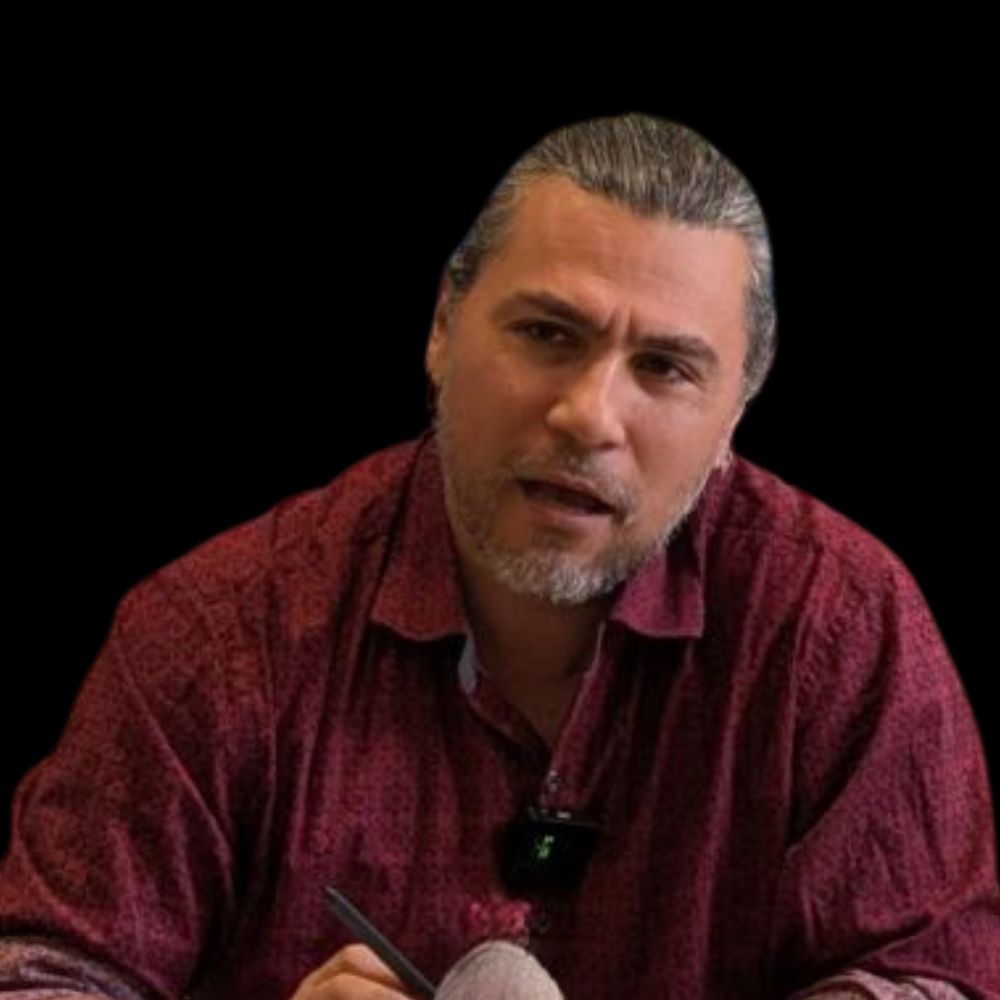
Prof. Dr. Francisco González

A Word From The Director

"We invite cultural workers, scholars, artists, and activists seeking a curriculum and community through which to ground and refresh their practice and to produce and empower shared knowledges."
Prof. Dr. Francisco González Program Director
Meet the Director

Curriculum

Politics Program

MA Politics seminars across the 2026–2027 year

September

Political Theory

Asma Abbas

Politics

October

History of Anarchism

Francisco González Castro

Politics

October–November

Political Economy

Silvia Federici

Politics

November–December

Art and Politics in Anarchism

Lucy Quezada

Politics

January

Research Methodologies

Asma Abbas

Politics

February

Imperialism and Colonialism

Manuel Carrión

Politics

March

Post-Anarchism

Alberto Pacheco Benites

Politics

April

Anarcho-Feminism and Intersectionality

Amapola Cortés

Politics

May–June

Further Studies in Politics II

Franco Berardi

Philosophy / Politics

June

Further Studies in Politics I

Chris Hedges

Philosophy / Theology / Politics

Course Descriptions

Political Theory — Asma Abbas, PhD
How do philosophies and theories of politics differ from theory that is political? The course engages with the varying historical and cultural demands of the task of political theorising, to track the changing means of politics and the political, as domains, discourses, vocabularies, and disciplines of human experience. A major emphasis on the ordinary arts of being human that constitute political engagement, and how attending to these enables us to think of politics, the human, time, place, thought, action differently. We visit all texts as agnostics, sceptics, and critics, assessing their approaches, definitions and arguments, earnestly working with and through them to (1) become fluent in basic concepts and terms at work, and (2) come up with our own speculations about what constitutes the political; when, where and how politics happens; what it means to think, ask, and act politically; and what being a student or "expert" of politics may entail.
History of Anarchism — Francisco González Castro, PhD
In this course, we will take a panoramic view of the history of anarchism. To do so, we will review some of its most relevant issues, such as criticism of authority, power, property, the state, and capitalism, correlating these ideas with some of its most representative thinkers, such as Proudhon, Bakunin, Goldman, Graeber, Chomsky, etc. To ground these analyses, we will also review specific cases where anarchism has been put into practice.
Political Economy — Silvia Federici, PhD
Description pending.
Art and Politics in Anarchism — Lucy Quezada, PhD candidate
In this course, we will review the aesthetic-political tradition of anarchism, which differs from the Marxist tradition or the left in general. To do so, we will focus on texts by Proudhon, Fénéon, Read, and Antliff, which represent different moments in history and how the relationship between art and politics has been understood in the anarchist tradition. We will also discuss artworks that represent this relationship.
Research Methodologies — Asma Abbas, PhD
This course invites students to take one aspect of their contemporary political experience and to unpack it using various tools and methods at their disposal, en route to assembling and articulating their own methodological framework (like an artist's statement would be for artists). Depending on where one starts to tell a history of the present, we find different crumpled timescapes of the global necropolitical postcolony. The course attempts to treat this as an occasion for a particular kind of political reading, and for enacting a desire for political, social, and cultural analysis that is honest about at least the inefficacy and, worse, the complicity of our epistemologies and methods in the conditions of our political existence. How are we to create totalities and frames that connect without colonising? Is it possible to read and harness our recent history in a way that impacts how we name, understand, and solve political problems? The course is attentive to differences and specificities that are often sacrificed to achieve grand theory, favouring methods of addressing the theoretical, temporal, and spatial intersections of political life that go further than a superficial intersectionality of race, class, and gender as positivist concepts, to a dynamic treatment of bodies, affect, memory, identities, cultures, institutions, power, and lifeworlds in contemporary geopolitics marked by old and new regimes of capital and colony. The emphasis will be on formulating our own frameworks and methods applicable to our projects and pursuits in conversation with these attempts.
Imperialism and Colonialism — Manuel Carrión, PhD candidate
This course offers a critical examination of colonialism and imperialism as foundational modalities of Western geopolitical engagement. We will analyze the historical trajectories of imperial power and their enduring impacts on global political structures, land-based relationships, and Indigenous sovereignty. By placing historical archives in dialogue with contemporary social movements, we will discuss how colonial logics continue to shape neoliberal governance and extractive capitalism in the Western world.
Post-Anarchism — Alberto Pacheco Benites, PhD candidate
In this course, we will review what has been understood as post-anarchist thought, which, in general terms, refers to a mixture of anarchist and poststructuralist traditions (influenced by the thinking of Deleuze, Guattari, Foucault, and others), where modern grand narratives and their universal values are criticized, and key notions of traditional anarchism, such as class, the subject, and power, are complemented.
Anarcho-Feminism and Intersectionality — Amapola Cortés, PhD candidate
In this course, we will approach anarcho-feminism as a field of intersection between anarchist theory and feminist theory, considering both its classical formulations and its contemporary critical reinterpretations. Throughout the course, we will explore the questions, tensions, and political stakes that emerge when anarchism is thought of in terms of the body, everyday life, and social relations. The course invites us to problematize notions such as autonomy, freedom, family, work, care, and community, articulating theoretical reflection and collective discussion. It proposes to incorporate debates and experiences situated in Latin America to challenge the canon.
Further Studies in Politics I — Chris Hedges
Description pending.
Further Studies in Politics II — Franco Berardi
Description pending.

Learn from World-Class Faculty

Our faculty are leading scholars, published authors, and practitioners who bring real-world expertise to every course.

Francisco González Castro (Santiago, Chile, 1984) is an artist, researcher and writer. He holds a PhD in Arts, major in Visual Arts, from the Pontificia Universidad Católica de Chile, and is part of both GCAS College Dublin and GCAS Latin America. He has exhibited his artistic work in numerous countries and presented his research in conferences, journals and books.

He is the author of Matar un Rey. Consideraciones para una práctica político-artística (2023), Fuera de lugar. Textos sobre prácticas artísticas, políticas y afectivas (2023) and Puntos en el Borde: crónica de un viaje por la frontera México-Estados Unidos (Almacén Editorial, 2022); editor of Otro lugar. Perspectivas sobre la empatía y sus potencias (Editorial Milhojas, 2022); and co-author of Performance Art en Chile (Metales Pesados, 2016), Mario Pedrosa y el CISAC (Metales Pesados, 2019) and El Arte como Revolución (Metales Pesados, 2022).

Asma Abbas is Full Professor of Politics and Philosophy, and Director of Transdisciplinary and Experimental Studies, at Bard College at Simon's Rock, where she began as an Assistant Professor in 2005, upon receiving her doctorate in political science from Pennsylvania State University. She also holds a Master's in Liberal Studies from the New School for Social Research, and Bachelor's and Master's degrees in Business Administration from the Institute of Business Administration, Karachi.

She is former Dean of Academics and Professor of Liberal Studies at the Indus Valley School of Art and Architecture in Karachi, and former Fulbright-Masaryk Distinguished Chair in Social Studies at Masaryk University in Brno. At Bard College at Simon's Rock she has held the positions of Emily H. Fisher Faculty Fellow, Division Head for Social Studies, Faculty Convenor of the Simon's Rock Study Group on Institutional Transition and Mission, and Director of Proseminar in Social, Political and Humanistic Inquiry. She is associate faculty at the Brooklyn Institute for Social Research, and teaches in the MPhil in Art and Design at the Indus Valley School. She is founding organiser of Hic Rosa and its international travelling Studio in Materialist and Anticolonial Politics and Aesthetics, the Falsework School for alternative community political education, and the ACCREW Caucus of the Democratic Socialists of America.

Her work is situated at the intersection of global politics, ethics, and aesthetics, combining historical, materialist, feminist, comparative, postcolonial, and continental perspectives. She understands herself as a historian of form and method, interested in probing historically contingent experiences in the service of anticolonial, anticapitalist, antifascist, and anti-nationalist hospitalities and imaginations. Her hope is to provoke the potency and history of these materialities as a means of revitalising the political, and to acknowledge the labour of those ordinary subjects whose possibilities call to be unlocked from the legibilities and locations granted them within dominant narratives.

Franco "Bifo" Berardi is an Italian Marxist philosopher, theorist, and activist whose work has profoundly shaped contemporary understandings of media, technology, and post-industrial capitalism. A key figure in the autonomist tradition, he has authored over two dozen books and numerous essays exploring the intersections of communication, desire, and political economy.

His political and creative engagement began early: he joined the Italian Communist Youth Federation at thirteen and was later expelled for "factionalism." A participant in the 1968 uprisings at the University of Bologna, where he earned his degree in Aesthetics, Berardi became active in the extra-parliamentary group Potere Operaio and founded the influential magazine A/traverso. He was also a co-founder of Radio Alice (1976–1978), Italy's first free pirate radio station.

Manuel A. Carrión-Lira is a PhD candidate in the Department of Literature at the University of California, San Diego, with a specialisation in Critical Gender Studies. As researcher, artist, and curator, his work is situated at the intersection of Indigenous media studies, decolonial theory, and speculative futures. He is co-founder of the Catrileo+Carrión Community, a collective of epupillan (two-spirit) Mapuche champurria (mixed) artists-researchers dedicated to the political regeneration of dissident genealogies of thought and praxis.

His doctoral research, supported by a Fulbright Fellowship and the Speculative Environmental Futures Collective, theorises Abiayalan Media — a new cycle of Indigenous media that employs strategies of dissent and refusal to challenge the modern-colonial order of the nation-state. His methodology, termed mapulectics, develops an Indigenous materialist reading practice that engages the relationality of land, matter, and cosmos to envision sovereign futurities beyond extractive capitalism. His curatorial record includes co-founding the Otherwise Film Festival and producing programmes such as Chileyem: An Experimental Mapuche Film Program (2020) and Screening Pachacuti: Contributions from Transandean Decolonial Visions (2024).

Areas of interest
  • Indigenous media studies — film, video, and digital arts
  • Decolonial theory and trans-Indigenous epistemologies
  • Critical gender and sexuality studies — epupillan/two-spirit, Indigiqueer, and queer Indigenous perspectives
  • Speculative environmental futures and anti-extractive politics
  • Curatorial practice as decolonial methodology
Recent publications
  • "Grey Materialisms: Curating Mapulectics and Ch'ixi Visions in the Ruins of the Nation-State," post(s), Vol. 13. Quito: USFQ Press (2026, under review).
  • Opacidades Generativas / Generative Opacities. Compiled by Catrileo+Carrión Community (2026, forthcoming).
  • "$hileyem (Chile se acabó, The End of Chile): Indigenous Media and Decolonial Futurities beyond the Settler State," in Dismantling the Nation: Contemporary Art in Chile. Amherst College Press (2023).
  • "Una conversación cosmoléctica a través de Cherufe, la Bola de Fuego," in Abiayalan Pluriverses: Bridging Indigenous Studies and Hispanic Studies. Amherst College Press (2023).

Amapola Cortés Baeza is an art historian, aesthetician, and Latin Americanist with academic training in anthropology. Her work is situated at the intersection of visual studies, the anthropology of images, and protest studies, with particular attention to theatricality, performance, and embodied practices in contexts of social mobilisation in Latin America. She has examined the political dimensions of the body in protest, focusing on the hood as a symbolic device of anonymity, stigmatisation, and the formation of collective identities.

She is a doctoral candidate in Anthropology at the Universidad Autónoma Metropolitana in Mexico. Her doctoral research explores the role of memory museums in shaping narratives of social struggle through a comparative study of Mexico and Chile. Adopting a critical and situated approach, she analyses how these museum spaces articulate collective memories that extend beyond trauma-centred frameworks, emphasising the relationship between artistic practices, memory, protest, and political action.

Her research interests include the anthropology of images, performance and protest, memory studies, memory museums, and social movements in Latin America.

Recent publications
  • Arellano Rivera, D. E., López García, I. E. and Cortés Baeza, A. S. Memorias de las Guerrillas. Universidad Nacional Autónoma de México (2025).
  • "Nuevo Memorial del 68 y movimientos sociales," Discurso Visual, nos. 55–56 (2025).
  • "Dos Chiles que no son lo mismo, pero son igual. Movimientos en resistencia 1987–2011," in Participación ciudadana, resistencias sociales y acción colectiva en la vida contemporánea. UNAM (2021).
  • "El encapuchado: rebelión y villanía," in Estigma y villanía: la construcción simbólica del enemigo. UNAM / CIALC – Bonilla Artigas Editores (2020).

Silvia Federici is a feminist scholar, historian, and activist best known for her work on gender, capitalism, and social reproduction. A co-founder of the International Feminist Collective, she is the author of influential books including Caliban and the Witch, which reshaped debates on primitive accumulation, witch hunts, and the historical foundations of capitalism.

Chris Hedges is a Pulitzer Prize-winning journalist who spent fifteen years as a foreign correspondent for The New York Times, serving as Middle East and Balkans bureau chief and reporting from more than fifty countries. He was part of the team awarded the 2002 Pulitzer Prize for Explanatory Reporting for the paper's coverage of global terrorism, and received the Amnesty International Global Award for Human Rights Journalism the same year. He reported earlier for The Christian Science Monitor, The Dallas Morning News, and National Public Radio, covering the conflicts in El Salvador, Nicaragua, and Guatemala.

He is the author of War Is a Force That Gives Us Meaning, a finalist for the National Book Critics Circle Award, along with American Fascists, Empire of Illusion, Death of the Liberal Class, Wages of Rebellion, Days of Destruction, Days of Revolt with the cartoonist Joe Sacco, and America: The Farewell Tour. He holds a BA in English literature from Colgate University and a Master of Divinity from Harvard Divinity School, where he also studied ancient Greek and Latin. He has taught at Columbia University, New York University, Princeton University, and the University of Toronto, and has taught college-credit courses in the New Jersey prison system since 2013. He writes and broadcasts The Chris Hedges Report.

Alberto Pacheco Benites (Lima, 1986) is a Peruvian-born lecturer and researcher. He is the author of Mutaciones de nuestro régimen informacional (2018), as well as numerous essays published in books and academic journals across the Americas and Europe. He is currently a PhD candidate in Communication Sciences at the University of Paris 8 and holds an MA in Philosophy from the National University of San Marcos in Peru.

He has worked as a Senior Lecturer and researcher in France, where he holds the habilitation required to serve as Associate Professor, awarded by the National Council of Universities of France. Prior to this he was a Full Professor and researcher at Peruvian universities for more than a decade. He has also worked as a consultant in communication and culture for public and private organisations, founded and directed two communication start-ups, and worked in journalism in Peruvian media.

His research focuses on two main areas: the critical effects of digital technologies and the contemporary socioeconomic order on subjectivities, institutions, and mechanisms of power; and the political dynamics of Latin America and Peru, with particular attention to the consolidation of neo-reactionary movements, whose practices and discourses are deeply intertwined with the historical tensions that have shaped the continent.

Lucy Quezada Yáñez (b. 1990, Talagante, Chile) is an art historian who earned her PhD in Art History at the University of Texas at Austin. Her research centres on contemporary Latin American art, with an emphasis on the relationships between art and politics in the Southern Cone. Her doctoral research, advised by Dr Adele Nelson, explores the official field of visual arts during the military dictatorships of Argentina, Brazil, and Chile between the 1960s and the 1980s. She received her BA and MA from the Universidad de Chile, and her earlier research focused on Chilean cultural institutions of the early 1970s, including the Museo de la Solidaridad and the Instituto de Arte Latinoamericano.

Recent publications
  • "La monumentalidad de lo efímero. Notas para una mirada latinoamericana sobre 50 años/50 acciones," in 50 años/50 acciones. Imaginando el Porvenir (2025).
  • "Los artistas del Brasil nos tienden la mano: artes visuales y diplomacia cultural entre las dictaduras militares de Brasil y Chile en 1974," MODOS: Revista de História da Arte, v. 8, n. 3 (2024).
  • "«En las urgencias de la realidad» Perspectives about the Vicaría de la Solidaridad," Not Even Past, University of Texas at Austin (2022).
  • El arte como revolución. Debates, redes y actualidad del Instituto de Arte Latinoamericano. With Claudia Cofré and Francisco González. Metales Pesados (2022).
  • Mário Pedrosa y el CISAC. Configuraciones afectivas, artísticas y políticas. With Claudia Cofré and Francisco González. Metales Pesados (2019).

Your Career

This program prepares you for leadership roles across academia, industry, and public service.

Academia & Research

Pursue doctoral studies or research positions at leading universities worldwide.

Public Policy

Shape policy at NGOs, government agencies, and international organizations.

Cultural Institutions

Lead at museums, foundations, and cultural organizations.

Consulting

Apply critical thinking skills to strategy and management consulting.

Writing & Publishing

Pursue careers in journalism, publishing, and content creation.

Education

Teach at secondary or post-secondary institutions.

Investment

Total Tuition €6,000

€3,500 if you apply by 1 September

Financial Aid Available

Every accepted student receives tuition reduction scholarships. We are committed to making education accessible.

Admission Requirements

Admission Requirements

Our collective of faculty and students hails from some of the best and experimental academic institutions in the world, including the New School for Social Research, Bard College at Simon's Rock, Columbia University, Johns Hopkins University, Smith College, University of Pennsylvania, University of Oregon, Indus Valley School of Art and Architecture, Jawaharlal Nehru University, and University of Leiden, to name a few. Most importantly, they emerge from diverse geographic, academic, and political locations — summoning every continent and tackling the history and aftermath of colonialism, oppression, and liberation.

Entrance is very competitive and most successful applicants have a first-class degree or the equivalent. Most successful applicants hold degrees in the liberal arts, humanities, and social sciences widely considered. We are interested more in your approach to knowledge and its production rather than the content or specific discipline of your degree. Applications from all backgrounds are encouraged if sufficient motivation, interest, an appreciation for the politics of knowledge, and a commitment to remaking the university anew can be demonstrated.

Applicants must possess an accredited Bachelor's degree to be considered for admission. To help us accomplish our goal of truly accessible education, the application does not have a fee.

Häufig gestellte Fragen

The MA in Politics is designed to be completed within one year, though many students finish in approximately 15 months. Flexible pacing allows participants to extend their studies up to two years, depending on individual circumstances and research timelines.

As the world’s first Master’s track with a formal concentration in Anarchist Studies, this program provides a rigorous, radical critique of dominant global structures, state power, and capital. Led by world-class activist-scholars, the curriculum explores the history of anarchism, post-anarchism, political economy, and anarcho-feminism, treating politics not as a corporate bureaucratic career, but as a living practice for genuine social transformation.

You complete 10 courses (3 ECTS credits each, totalling 30 ECTS). Each course meets four times for discussion. Students write weekly reflections, deliver a 10-minute presentation, and submit a 1,500-word research paper per course. After completing coursework, you move on to the thesis and comprehensive examination (60 ECTS).

Yes. The GCAS MA in Politics is 100% online, including live seminars, coursework, supervision, and thesis development. The programme is designed for global participation without any on-campus requirements. However, we do offer occasional residential intensives in cities like Paris, Berlin, Belfast, and Florence — these are optional and also available online. GCAS does not issue student visas to study in the EU.

No. The MA in Politics welcomes applicants from all academic and professional backgrounds. We are interested more in your approach to knowledge and its production rather than the content or specific discipline of your degree. Cultural workers, scholars, artists, and activists are all encouraged to apply. Motivation, intellectual curiosity, and a commitment to critical thinking are central to admission.

Yes. After completing the 10 required courses, students work closely with a supervisor to develop a 20,000-word Master's thesis. Supervision is matched to each student's research focus. Students meet with their academic supervisor monthly to ensure writing and research targets are accomplished.

Yes. The MA in Politics is research-driven and designed to prepare students for doctoral-level (PhD) study in politics, political theory, and related fields. GCAS also offers a PhD program in the Humanities and Social Sciences to which graduates of the MA in Politics are often invited to continue their research.

Tuition fees are €3,500 if you apply by 1 September and are accepted. This applies for national and international students. Financial aid for a tuition fee reduction of up to 50% is available to all students upon application. Tuition can be paid in installments. To help us accomplish our goal of truly accessible education, the application does not have a fee. Once you graduate, you will become a co-owner of GCAS College Dublin.

Yes. The programme is accredited by the European Union through Woolf a higher education institute. Once completed, the degree can be used to continue into post-graduate education and apply for academic, policy, and professional positions worldwide.

This programme combines elite faculty — including Pulitzer Prize–winning journalist Chris Hedges and renowned political economist Silvia Federici — with global access, flexible online study, affordable tuition, and a strong research focus. The concentration in Anarchist Studies makes it one of the most distinctive MA programs in politics worldwide.

Ready to Begin?

Applications are open year-round. Start your journey today.

Submit My Application
GCAS Logo
Überblick über den Datenschutz

Diese Website verwendet Cookies, damit wir Ihnen die bestmögliche Benutzererfahrung bieten können. Cookie-Informationen werden in Ihrem Browser gespeichert und dienen dazu, Sie wiederzuerkennen, wenn Sie auf unsere Website zurückkehren, und unserem Team zu helfen, zu verstehen, welche Bereiche der Website Sie am interessantesten und nützlichsten finden.